


Evidence Collection by Sample Type
Identifying and correctly collecting samples are critical steps in successful DNA profiling. We recommend that samples be collected by law enforcement personnel, animal control officers, veterinarians, or other experienced professionals. When practical, it is best to submit the entire evidence item for DNA analysis. If this is not feasible, cuttings or swabs of the item may be submitted. Never collect samples into a plastic bag unless the sample is to be frozen.
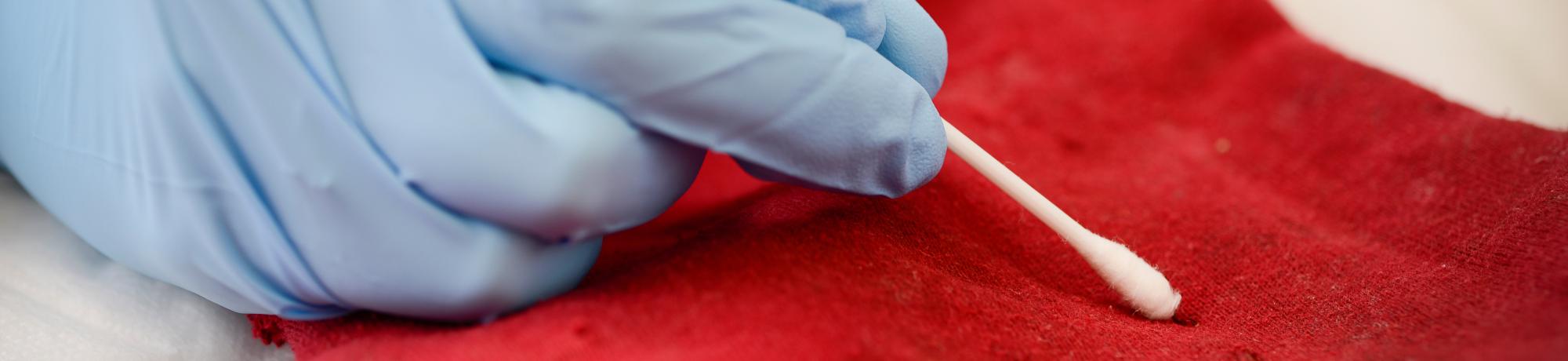
Swabbing Method: Lightly moisten a clean cotton swab with sterile water or saline solution available from a drug store. Carefully rub the sample area with the cotton swab, collecting as much material as possible. Additional swabs can be collected, but only one swab should be handled at a time. Allow the swabs to air-dry while keeping them out of direct sunlight. Never use a hair dryer or oven to dry the swabs. Place them into individual paper envelopes and then seal and sign across the seals.
Sample Types:
- Blood
- Buccal (cheek) swab
- Bones and Teeth
- Hair
- Dog Feces
- Meat, Organ, and Hide
- Saliva
- Semen or Urine
- Blood - Fresh
Collect fresh blood by venipuncture into an anticoagulant tube and refrigerate until shipping. - Blood - Dried Stains
When samples are located on smaller items such as clothing or weapons, the entire object should be placed in a paper envelope and shipped to the laboratory at room temperature. Blood frozen in snow and ice should be collected into a tightly sealed tube and, if possible, kept frozen. Bloodstains on items that cannot be shipped can be collected using a clean lightly-moistened cotton swab. Allow the swab to air-dry and then seal in a paper envelope and ship at room temperature. - Blood - Wet Stains
Sample wet blood on an item by using a dry swab. Avoid contaminating the sample with leaf material or dirt that can inhibit DNA analysis. Air-dry the swab for a few minutes, and then place it in a paper envelope and ship at room temperature. If the object is small, allow the sample to air dry and ship the entire object. - Buccal (Cheek) Swabs
Cheek swabs are a non-invasive method of collecting DNA from known dogs and cats for comparison with an evidentiary sample. No food or drink should be allowed for thirty minutes prior to sampling. A swab (supplied at no charge by the laboratory) is placed against the inside of the cheek and swirled for ten seconds. Allow the swab to air dry briefly, and return it to the wrapper. Do not tape or seal the end of the wrapper. Repeat with a second swab for the other cheek of the same animal. - Bones and Teeth
If the soft tissue is too degraded, then teeth are the preferred tissue for post mortem DNA testing. Submit molars or large teeth in good condition with no chips or cracks. Do not bleach or clean the teeth. If teeth are unavailable, submit approximately 3-4 inches of a long bone such as femur or humerus. Do not send large pieces of carcass or whole animals. Do not bleach or clean the bones prior to submission. Teeth or bone samples that are wet should be triple wrapped to avoid leakage during shipping and sent by overnight courier. - Hair
Loose evidentiary hairs should be handled in a manner to preserve any epithelial cells adhering to the hair shaft. Ideally, collect loose hairs into paper or glassine evidence bags, dry-mount on microscope slides, or collect onto a Post-It note. Hair samples lifted with a gel lift or conventional fingerprint tape should be placed sticky side down on paper or a slide for shipping. Mounted hairs may be shipped in slide mailers. For live large animals (not dog or cat), pull about 10-20 hairs from the mane (horse), tail (horse or cattle), or neck guard hairs (elk and deer), being careful to obtain the hair roots. Do not cut the hairs. Place the samples in a paper envelope and seal. Do not use a plastic baggie. If the remains of an animal are more than 2 hours decomposed, do not collect a hair sample. Teeth or tissue are better sampling options for deceased animals. - Dog Feces
Dried feces should be placed in a breathable container and protected from crushing during shipping. Collect moist feces in a leak-proof container and immediately ship to the laboratory by overnight courier. If collected on a weekend, refrigerate until shipping. Feces that is runny or has visible mold should not be submitted. - Meat, Organ, and Hide Samples
When sampling a dead animal, collect a small piece of tissue by clipping the ear, tongue, or leg muscle. Freeze fresh tissue in an airtight container and ship with a cold pack by overnight courier. Dried tissue may be sent at room temperature. Do not submit soft tissue that is decomposing. Note: The laboratory will not accept post mortem tissue from deer or elk in areas affected by Chronic Wasting Disease (CWD). Paraffin-embedded tissue is usually an adequate source of DNA. Excise an approximately 2 mm slice of tissue and submit the sample in a sealed container. Formalin fixation can inhibit DNA analysis, but tissues fixed for up to 10 days in formalin may be submitted. - Saliva
If feasible, it is best to submit the entire item for DNA analysis of saliva. If this is impractical, then swab or excise the suspect areas. Animal saliva has been successfully DNA typed from clothing, toys, food bowls, human skin, and the fur of other species. If saliva is being collected from an attack on another animal, clip the victim’s fur around the wound while avoiding areas with visible blood. Allow saliva to air dry at room temperature prior to submitting. - Semen or Urine
Collect the sample in a leak proof container (at least 50ml of urine), and freeze. If material is dried onto another object, submit the entire object or swab the object with damp cotton swabs. Allow the swabs to air-dry and place them in a paper envelope. Liquid samples should be frozen, triple wrapped, and shipped overnight with a cold pack.