


 Dun Dilution
Quick Summary
Click here for Price and Turnaround Time
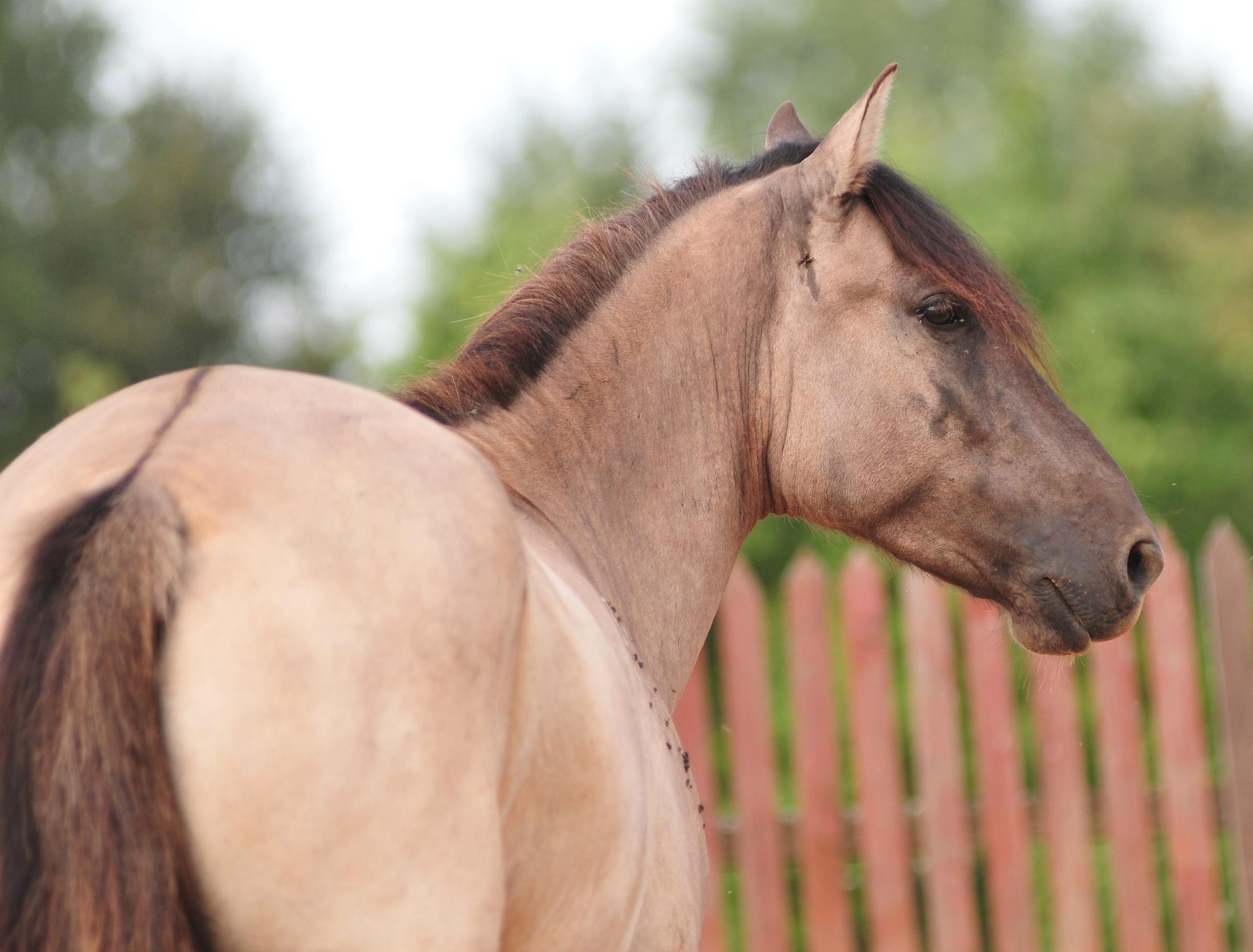
Phenotype: Dun is a coat color dilution characterized by lightening of the coat, with the head, lower legs, mane and tail undiluted. Oftentimes, dun is also characterized by "primitive markings" such as a dark dorsal stripe, barring of the legs, shoulder stripes, and "cobwebbing" on the forehead.
Mode of Inheritance: Autosomal dominant
Alleles: D = Dun dilute, nd1 = Non-dun 1, nd2 = Non-dun 2
Breeds appropriate for testing: Andadura, Andalusian, Appaloosa, Azteca, Bashkir Curly, Caspian Horse, Connemara Pony, Criollo, Curly, Icelandic Horse/Pony, Kallblodstravare, Kiger Mustang, Lusitano, Mangalarga, Mangalarga Marchador, Miniature Horse, Morgan Horse, Mustang, Norwegian Fjord Horse, Paint Horse, Paso Fino, Peruvian Paso, Pony of the Americas, Przewalski's Horse, Quarter Horse, Shetland Pony, Spanish Mustang, Welsh Pony, related breeds
Explanation of Results:
- Horses with nd2/nd2 genotype will not be dun dilute and will not have primitive markings. They cannot transmit a dun dilution variant to their offspring.
- Horses with nd1/nd2 genotype will not be dun dilute, but may have primitive markings. They may transmit the non-dun 1 variant to 50% of their offspring.
- Horses with nd1/nd1 genotype will not be dun dilute, but may have primitive markings. They will transmit the non-dun 1 variant to all of their offspring.
- Horses with D/nd1 or D/nd2 genotype will be dun dilute and will display primitive markings. They may transmit the dun dilute variant to 50% of their offspring.
- Horses with D/D genoytpe will be dun dilute and will transmit the dun dilute variant to all of their offspring. Matings with any genotype are predicted to produce dun dilute offspring.
Horse Coat Color Panel
$85 per animal
Full Color/Pattern Panel
$155 per animal
Shetland Pony Coat Color Panel
$100 per animal
Sample Collection
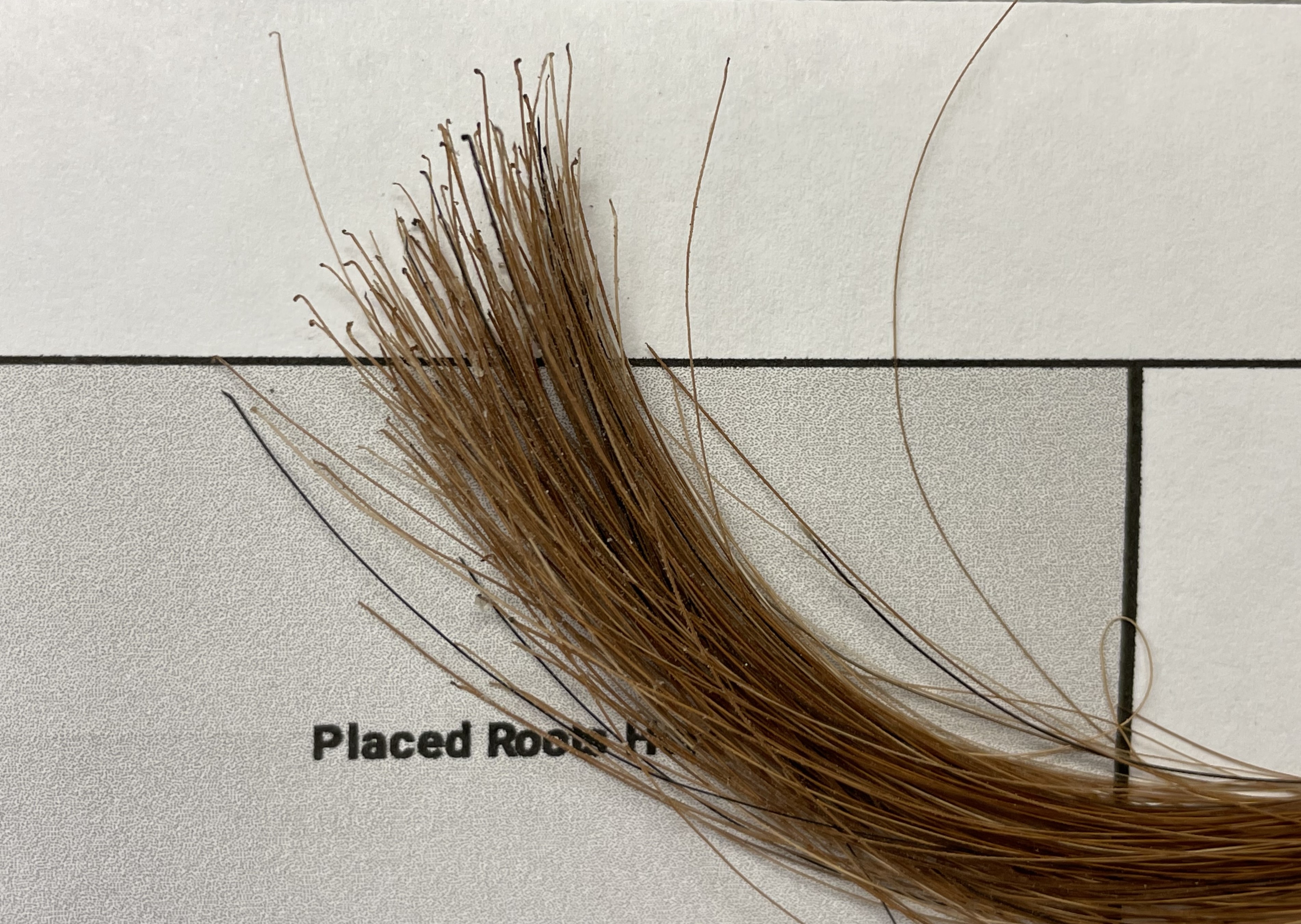
Horse DNA tests are carried out using cells from the roots of a hair sample (roughly 20-40 hairs).
1. Grab about 10 hairs at the base.
2. Wrap the hairs around your finger and give it a quick pull.
3. Check the ends to make sure the pulled hairs have roots.
4. Repeat the process until you have collected about 20-40 hairs with intact roots.
5. You can choose different places on the mane or tail. NOTE: For foals, we recommend pulling all hairs from the tail only.
6. Tape the hairs to the submission form and fold the form along the dotted line to protect the sample. Do not use ziploc bags as they can cause condensation that allows mold to grow on the hair.
7. Place the folded form containing the sample in a paper envelope and mail it to the laboratory.
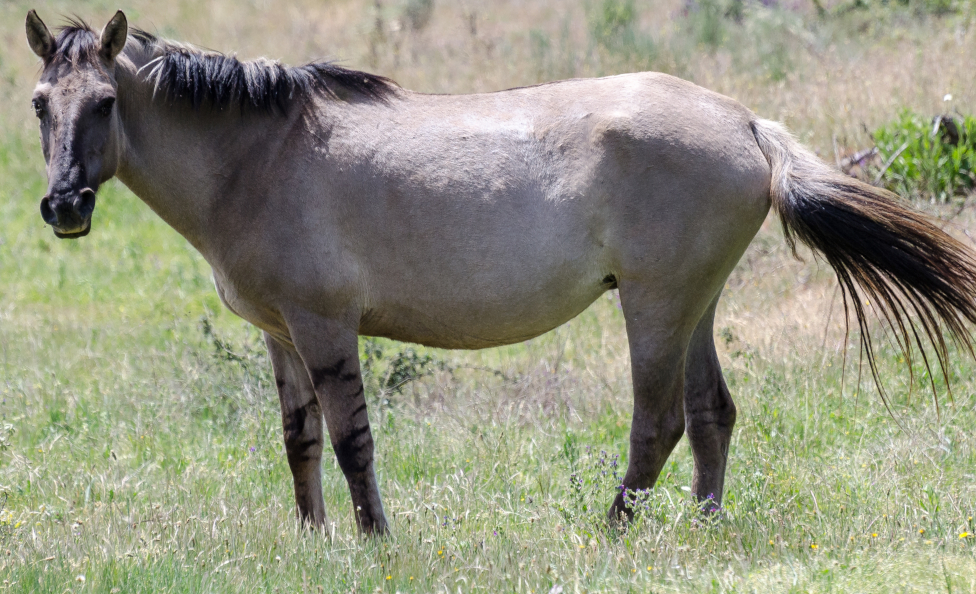
Dun is a dominant trait of equines characterized by lightening of the body color, leaving the head, lower legs, mane, and tail undiluted. Dun is also typically characterized by “primitive markings” consisting of a dark dorsal stripe and sometimes leg barring, shoulder stripes, and concentric marks on the forehead (spiderwebbing, cobwebbing). Dun with primitive markings is considered the “wild-type state” and is found in other equids such as Przewalski horses, zebras, and wild asses. The expression of the primitive markings (with or without dun) in the domestic horse is variable, with the dark dorsal stripe being the most consistent and visible feature. Dun dilutes both red and black pigment, and the resulting colors range from apricot, golden, dark gray, olive and many more subtle variations. Dun is present in many breeds of horses including (but not limited to) Appaloosa, Bashkir Curly, Iberian horse breeds (rare, except in Sorraias), Icelandic Horse, Mustang, Norwegian Fjord, Paint, Paso Fino, Peruvian Paso, Quarter Horse and several of the pony breeds. The names assigned to the various dun shades vary by breed.
The Dun dilution results from radially asymmetric deposition of pigment in the growing hair controlled by localized expression of the TBX3 gene in hair follicles. The absence of Dun dilution (more circumferential distribution of pigment in the hair) results from a 1,617 bp deletion of DNA that impairs TBX3 expression in hair follicle. An additional SNP change was shown to govern the presence or absence of primitive markings. Three alleles therefore explain phenotypes related to Dun dilution – D (presence of dun dilution and primitive markings), nd1 (not Dun-diluted; primitive markings are present but expression is variable), nd2 (1,617 bp deletion, not Dun-diluted, primitive markings absent). With respect to variant interactions, D is dominant over nd1 and nd2; nd1 is dominant over nd2.
Testing for the dun dilution allows breeders to identify homozygous animals (animals with two copies of the variant) which will always produce dun dilute offspring.